
a selection of classes i have taught and designed

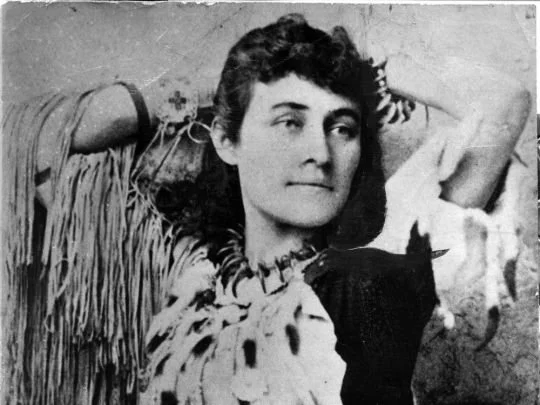
Sculptor Judith Scott, photographed by Leon A Borensztein
Book Cover of Eve K. Sedgwick’s Touching Feeling: Affect, Pedagogy, and Performativity
Affect in Modern Literature and Theory
Ludwig-Maximilian Universität of Munich (LMU)
Department of Comparative Literature
In the late nineteenth century, profound social and epistemic transformations gave rise not only to new forms of analytical and scientific reasoning—pragmatism, experimental methods, and processes of rationalization—but also to an intensified concern with affect as a site where knowledge, perception, and social norms intersect. As modern societies increasingly sought to explain social life through systematic methods, literature, philosophy, and the social sciences simultaneously grappled with experiences that appeared resistant to rational explanation.
Seemingly independent of reason, affects appear to represent the most subjective, immediate—and incommunicable—form of experience. Yet, affective sensations connect subjective feelings with historically specific social norms, conventions, and traditions that influence both our perception of and our affective responses to “ideas, values, and objects” (Sara Ahmed). The seminar takes this tension as its point of departure, treating affect not as a private residue outside knowledge, but as a crucial medium through which social meanings are produced, transmitted, and contested.
Students will examine the relationship between literature and affect from two complementary perspectives. First, students will analyze how literary and visual texts represent emotions, passions, and moods as responses to modern social conditions. Second, the course investigates how literary forms deliberately mobilize affect as an epistemic strategy—shaping perception, guiding judgment, and organizing interpretation. Rather than opposing affect to reason, the course explores how emotional responses function as mediating structures between individual experience and broader social, cultural, and epistemic frameworks.
Each session is organized around a specific affect—such as shame, fear, anger, paranoia, or envy—and examines how that affect is theorized, represented, and mobilized across different forms. Sessions typically pair a literary or cinematic text with a theoretical or philosophical reading, enabling students to develop analytical tools for understanding how affect operates as a mediating force between individual experience and social norms across genres and media, including fiction, theater, and film. Readings range from canonical works of modern literature to key texts in affect theory and social thought. Through close reading and comparative analysis, students situate individual works within larger debates about modernity, social norms, and forms of knowledge.

Seeing and Believing
EVIDENCE, SUSPICION, AND THE LIMITS OF INTERPRETATION
Core Curriculum Class, designed for NYU College of Arts and Sciences
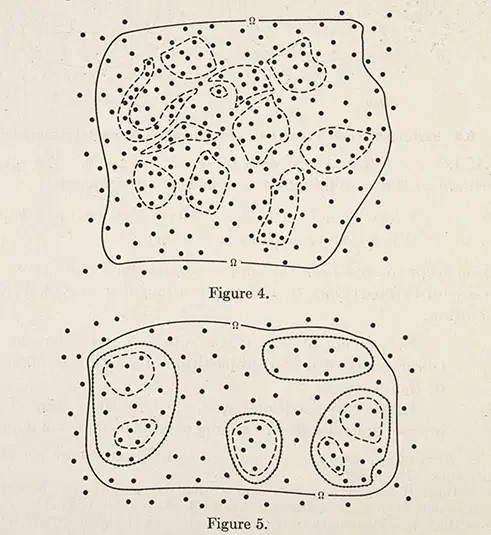
How do we decide what counts as evidence? How do humans move from signs, traces, and symptoms to claims about truth, responsibility, and causality? This course examines the history of evidentiary reasoning across philosophy, law, science, and literature, from antiquity to the twentieth century. Rather than treating evidence as a self-evident or purely technical category, the course approaches it as a historically variable mode of inference—one that shapes how societies produce knowledge, assign responsibility, and exercise judgment.
Focusing on moments when inference becomes strained, suspicion replaces proof, and the search for truth threatens to collapse into speculation, students explore how evidentiary practices are constructed, formalized, and challenged. The course traces philosophical accounts of proof, legal and forensic attempts to systematize evidence, and literary works that reflect on, disrupt, or parody these methods.
Readings include thinkers such as Aristotle, Hume, Peirce, Freud, Ginzburg, Arendt, and Foucault, alongside literary texts by Sophocles, Kafka, Flann O’Brien, and Pynchon. Together, these materials invite students to examine how evidentiary systems generate trust, when they produce suspicion, and why the accumulation of clues can sometimes undermine rather than secure knowledge.
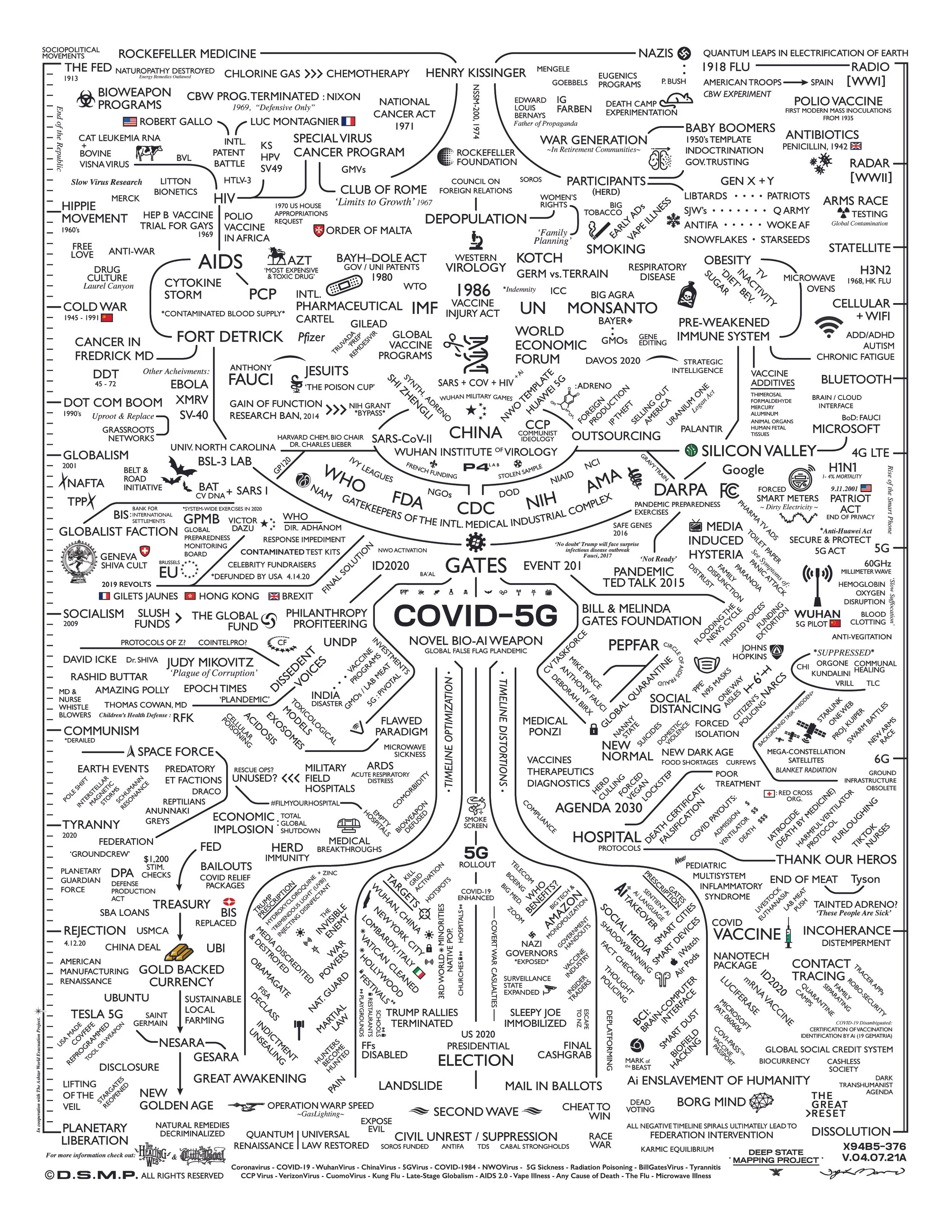
By the end of the course, students will have developed a critical framework for analyzing the possibilities and limitations of evidentiary reasoning and for situating contemporary issues—such as the prevalence of conspiracy theories, deepfakes, and AI-generated misinformation—within a longer history of evidentiary practices that challenges the pervasive assumption that seeing is believing.
Games of Truth
PLAY IN/AS THEORY
Core Curriculum Class, designed for NYU College of Arts and Sciences
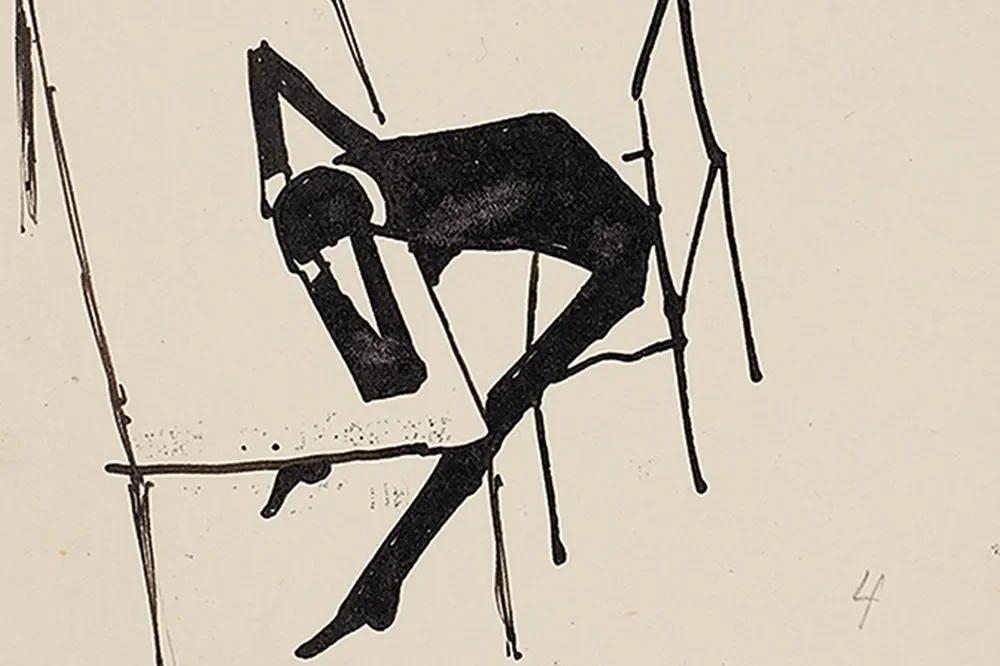
Often dismissed as a mere pastime, play is, in fact, a fundamental mode of understanding the complex realities that shape our lives. This course examines the concept of play as a serious object of academic inquiry, tracing its theoretical, artistic, and cultural dimensions across different forms of knowledge. Participants will examine the significance of play in various academic disciplines, including animal studies, anthropology, critical theory, economics, psychology, and computer science, as well as different art forms such as Literature, theater, visual art, and video games. By examining the concrete ways people are playing to learn, playing for fun, and playing for survival, we will consider how "play" shapes identity formation and informs, solidifies, or challenges our understanding of our surroundings. As both an object and a method of inquiry, play will provide a vital framework for analyzing behavioral patterns, shifting cultural values, socio-political issues and existential questions about the nature of life - and the paradoxes that define it. By the end of the class, participants will not only have gained a comprehensive understanding of the formative relationship between play and theory but will also have acquired the tools to critically engage with the pervasive "gamification" of our contemporary society, in which game principles increasingly define the way we engage with media, technology and each other.
NYU Core Curriculum Classes that classes I worked on as a Teaching Assistant and Recitations Instructor
Literature and Conspiracy
University of Zurich (UZH)
Department of German
Conspiracy theories aim to uncover hidden secrets, concealed truths, and sinister intrigues. They call established certainties into question and search for clues pointing to an alleged plot. In doing so, they not only “detect” suspicious signs, but also actively generate suspicions, “alternative facts,” and ressentiments.
Modern literature places the motif of conspiracy at the center of narrative practice. Plots and intrigues become not only thematic objects, but also formal and representational strategies. On the one hand, this seminar examines conspiracies in literature; on the other, it investigates how contemporary conspiracy theories appropriate literary techniques, motifs, and rhetorical strategies in order to produce forms of suspicion.
The course draws in particular on perspectives from semiotics, psychoanalysis, discourse analysis, Critical Race Theory, affect studies, and ecocriticism

A Long History of Cybernetics
Designed by Leif Allison Reid Weatherby
Associate Professor, Department of German
Director, Digital Theory Lab
Affiliate Faculty, Comparative Literature and Media, Culture and Communication
Derived from the Greek word for “steersman,” “cybernetics" was an interdisciplinary movement of engineers and management experts, philosophers and scientists, who developed the hardware and terminology of the digital world we live in today. Its goal was to recast the full range of scientific and philosophical knowledge with the aim of studying and guiding organized systems—animals, machines, social bodies. Its leading figures drew on a long history of mostly Western philosophical and scientific thought, and their work generated and was inspired by a new kind of literature called “science fiction.” This course is an introduction to this discipline and its deep intellectual roots. We will proceed thematically, starting with the key terms “communication” and “control,” and treating such topics as the computer, the system, the animal, intelligence, and emergence. Readings will include early and second-wave cyberneticians like Norbert Wiener, Warren McCulloch, John von Neumann, and Heinz von Foerster. We will construe their concerns in terms of a long intellectual history stretching back to Plato, Kant, and Peirce, among others, complementing these readings with science fiction from Isaac Asimov to Octavia Butler, from Samuel R. Delany to Cixin Liu.
Fictions of America
Designed by Ulrich Baer
University Professor (NYU)
What does it mean to express yourself on your own terms and make your voice heard by others? How can we say something new about our existence that then becomes the model for others to express themselves, claim rights, and demand recognition? This course analyzes short “first” literary texts by path breaking authors to understand how literature satisfies the universal need for self-expression. The focus is on American literary authors who defined “America” as something truly new; the text for this course is Fictions of America: The Book of Firsts, a compendium of milestones in literature written by people who often lacked social, legal and political recognition and rights in the United States. Many of these authors were not considered citizens, full members of society, or even fully human - and yet they published works of fiction without receiving legitimation, approval or permission from a court or Congress.
By the end of the course, you should have a sense of how literature has contributed to the making of America’s self-understanding, how a person otherwise denied various rights claims a space via fiction, how literary works can affirm, change, and challenge political and social realities, and how the diversity of American writing has created some literary masterpieces that resonate to this day.
Justice and Injustice in Ancient and Modern Narratives
Designed by Joseph H.H. Weiler
University Professor (NYU)
Joseph Straus Professor of Law
European Union Jean Monnet Chaired Professor
Director, Jean Monnet Center for International and Regional Economic Law and Justice
The course will look at some of the most foundational texts in the evolution of normative thinking in Western Culture: The Bible (Old and New Testaments), the Greeks (Socrates’ Apology and Euripides’ Medea), and then more modern authors like Camus and Kafka.
Often God will be “on trial.” Was the Deluge Genocide? Is Abraham guilty of Child Abuse and Attempted Murder? Was Jesus Guilty as charged? Was Socrates? The themes are all of relevance to contemporary issues: communal responsibility vs. individual autonomy, ecological crisis, ethics vs. religion, freedom of speech and thought, genocide, rule of law and civil disobedience, the Other, punishment and retribution, religious intolerance, sanctity of human life, sex and gender, value and virtue.
From class to class students will be broadening and deepening their normative “tool kit,” learning to judge ethically challenging situations with greater discernment.
German Language Courses
During my Ph.D., I have taught all levels of German Language Classes at NYU’s Department of German
-
Fall 2019
-
Spring 2020
-
Fall 2020
-
Spring 2021
-
Summer 2022